
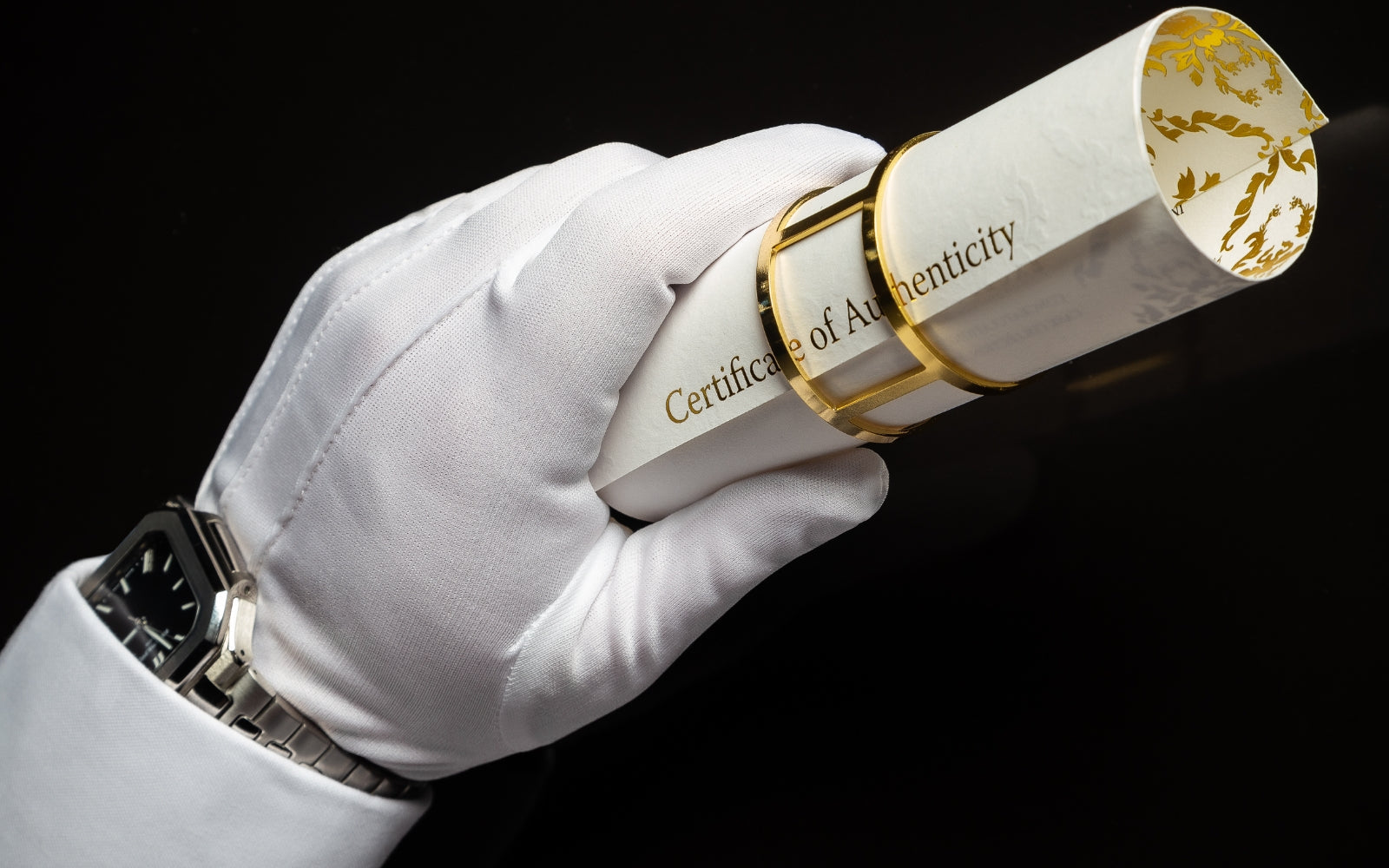
The Architecture of Trust
Luxury is often discussed in terms of craftsmanship, rarity and heritage. These qualities are undoubtedly important, but they do not fully explain why collectors repeatedly return to certain houses over decades, and in some cases across generations. The deeper explanation lies in trust. Collectors are willing to invest significant amounts of money, time and attention into objects because they trust the systems that produced them. They trust that the standards associated with a house will remain consistent. They trust that quality will not be sacrificed for convenience. They trust that the values which attracted them initially will continue to guide future decisions.
This form of trust differs from confidence created through marketing. Marketing can attract attention, but attention is temporary. Trust is accumulated through repeated experience. It develops when a collector observes a pattern of behaviour that remains consistent over time. The world's most respected luxury houses understand this distinction. They do not rely solely upon claims of excellence. They construct frameworks that allow excellence to be demonstrated repeatedly. Their authority emerges not from individual promises but from systems that make those promises credible.
Collectors are particularly sensitive to this dynamic because they often engage with a house over long periods. A first purchase may be influenced by curiosity, but subsequent purchases are influenced by confidence. The collector begins to recognise recurring standards. They observe how materials are selected, how releases are presented, how provenance is documented and how quality is protected. Over time, individual experiences accumulate into a broader perception of reliability. The collector no longer evaluates a single object in isolation. They evaluate the philosophy that produced it.
This principle explains why luxury houses devote so much attention to codifying standards. Standards serve a practical purpose, but they also perform a symbolic one. They communicate that quality is not dependent upon chance or individual circumstance. Instead, it is supported by a framework capable of producing consistent outcomes. Whether those standards relate to craftsmanship, design, provenance or service, they provide collectors with reassurance that excellence is being pursued systematically rather than opportunistically.
Provenance as the bridge to trust
Within the world of whisky, trust is closely linked to provenance. Collectors want to understand where a whisky came from, how it matured and why specific decisions were made. They seek transparency because transparency reduces uncertainty. A release accompanied by clear provenance disclosures, cask histories and maturation information becomes easier to evaluate. The collector gains confidence that the object reflects deliberate judgment rather than arbitrary choice. Provenance therefore functions as a bridge between craftsmanship and trust, a relationship we examine in The Provenance Question.
Trust built through evidence
At The Baroque Single Malt Whisky Company, this philosophy influences every aspect of the house. Provenance documentation, cask selection, maturation architecture and finite release structures all exist because trust is built through evidence. Collectors should not be expected to rely solely upon descriptions or promises. They should be able to examine the reasoning behind a release and understand the decisions that shaped it. We answer the questions collectors most often ask about casks, provenance and shipping on our FAQ page. Transparency strengthens appreciation because it transforms quality from an abstract claim into something that can be observed and understood.
This approach is visible throughout the Premium Range and Exceptional Cask Collection. Each release is designed to communicate not only flavour and character but also context. The objective is to provide collectors with a clear understanding of how a whisky reached its final form. Every cask carries a history. Every maturation environment contributes influence. Every bottling decision reflects a judgment. By documenting these elements, Baroque creates continuity between the object and the philosophy that produced it.
The Allocation Registry serves a similar purpose. While it provides access to future releases and provenance information, its deeper function is to strengthen trust through consistency. Collectors know that participation provides access to a structured system rather than a series of isolated opportunities. The relationship becomes more meaningful because it is supported by continuity. Trust grows when collectors can observe a coherent philosophy expressed repeatedly across different releases and experiences.
The Baroque Journal exists for much the same reason. Articles across the series document the principles that guide the house. These writings provide insight into the thinking behind production decisions, helping collectors understand not only what Baroque does but why it does it. Over time, this transparency creates a deeper level of confidence because the philosophy remains visible rather than hidden.
The discipline trust requires
Trust also depends upon restraint. One of the most effective ways to undermine collector confidence is to pursue short term opportunities at the expense of long term standards. Luxury history is filled with examples of houses that compromised quality, diluted exclusivity or abandoned their core philosophies in pursuit of immediate growth. While such decisions may deliver temporary gains, they often weaken the very foundations upon which collector trust depends. The most respected houses recognise that some opportunities are worth declining if accepting them would compromise the integrity of the brand. We explore this idea more fully in The Value of Restraint.
For this reason, trust and discipline are closely connected. Collectors understand that meaningful standards occasionally require difficult decisions. A cask may remain in maturation longer than expected. A release may remain finite despite strong demand. A particular opportunity may be rejected because it does not align with the philosophy of the house. These decisions may not always be visible, but their effects are. They contribute to a pattern of behaviour that collectors learn to recognise and respect.
Trust as enduring capital
Ultimately, trust is one of the most valuable forms of capital any luxury house can possess. Heritage strengthens it. Craftsmanship reinforces it. Provenance supports it. Yet none of these elements can replace it. Collectors may initially be attracted by rarity, design or reputation, but they remain loyal because trust has been earned. They develop confidence that the values embodied within an object will continue to guide future decisions. That confidence transforms appreciation into loyalty and loyalty into long term authority.
At The Baroque Single Malt Whisky Company, we believe that trust should be built deliberately, patiently and transparently. Every release, every provenance disclosure, every article and every collector interaction contributes to this objective. The goal is not simply to create exceptional whisky. It is to create confidence in the philosophy that produces it.
For collectors, this confidence is invaluable. It allows them to look beyond a single bottle and engage with the broader identity of the house. They begin to trust not only the object before them but also the decisions that shaped it. In luxury, that trust is rarely granted quickly. It is accumulated over time through consistency, discipline and transparency.
When it is earned, however, it becomes one of the strongest foundations upon which a lasting collector culture can be built.
Continue exploring
- The Provenance Question, the evidence behind every release
- The Exceptional Cask Collection
Leave a comment
This site is protected by hCaptcha and the hCaptcha Privacy Policy and Terms of Service apply.