
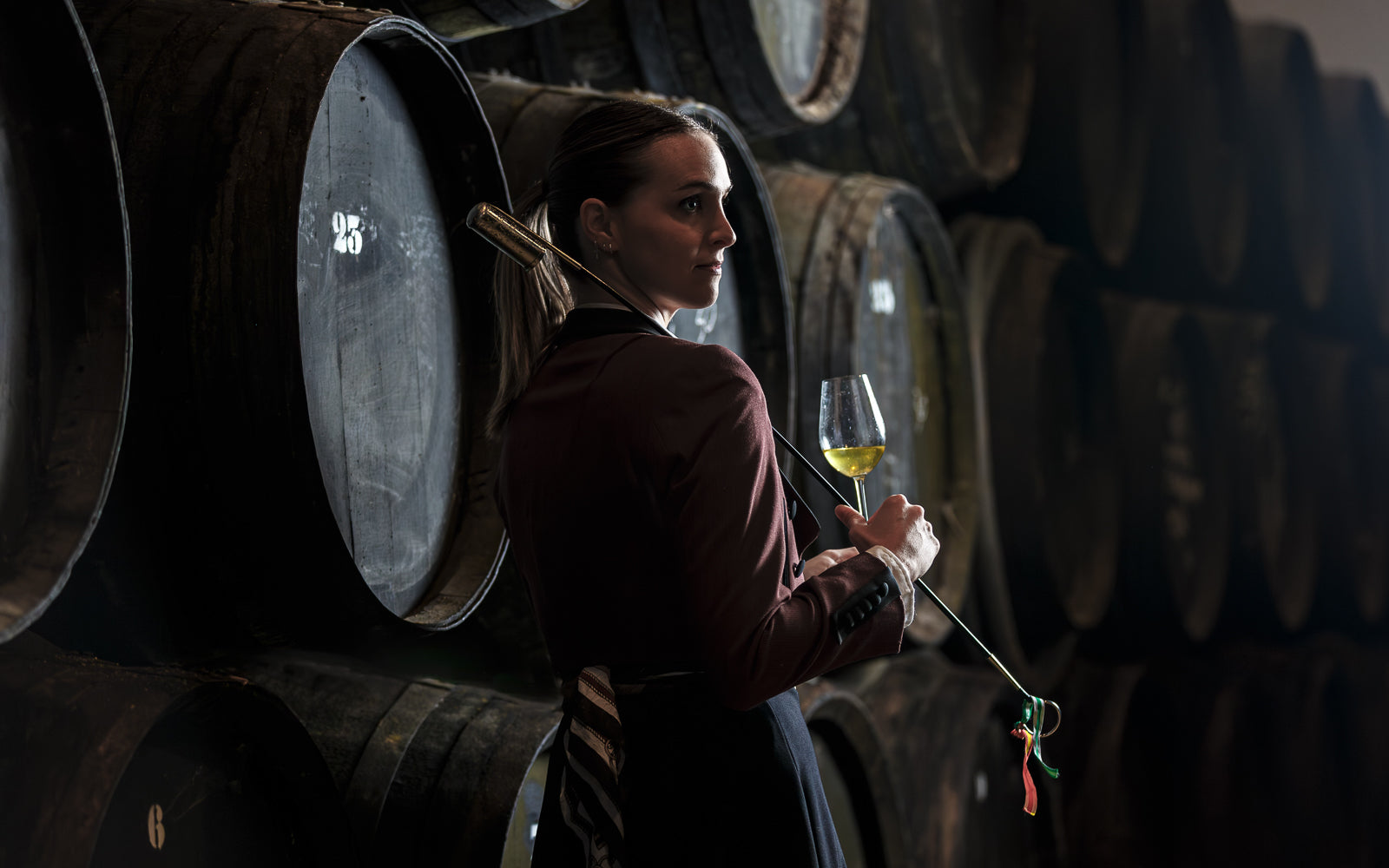
The Human Hand in an Industrial Age
The modern world has become extraordinarily efficient. Products are manufactured with remarkable consistency, global supply chains move goods across continents with astonishing speed and technology has eliminated many of the imperfections that once defined production. Yet despite these advances, some of the world's most desirable objects continue to derive their value from something that appears increasingly scarce: human judgment.
This observation sits at the heart of luxury. While mass production seeks consistency through standardisation, luxury seeks distinction through discernment. The difference is subtle but profound. Standardisation aims to eliminate variation. Craftsmanship seeks to understand it. One relies primarily on systems. The other relies upon expertise. For this reason, the language of luxury rarely speaks about products being manufactured. Instead, objects are described as crafted, refined, finished and mastered. These words are not simply marketing terminology. They reflect a fundamentally different philosophy of creation.
The value of human judgment
Collectors understand this distinction intuitively. When examining a finely made object, they are often responding to more than the physical materials involved. They are responding to evidence of judgment. The object reveals that a series of decisions were made deliberately rather than automatically. Materials were selected rather than merely sourced. Standards were applied rather than merely followed. The finished result reflects not only technical capability but also the accumulated experience of those responsible for its creation.
This principle extends across virtually every category of luxury. The appeal of a mechanical watch is not simply that it keeps time. It is that generations of expertise have been invested in designing, finishing and assembling a movement to exacting standards. The appeal of a handcrafted automobile is not merely its performance, but the countless decisions regarding materials, proportions, engineering and finish that contribute to its character. We explore that shared mindset in the vintage sports car and the single cask. The same principle applies to whisky. While the final spirit may be measured, analysed and evaluated, the most significant decisions often occur long before the whisky reaches a bottle.
Craftsmanship as decision making
At The Baroque Single Malt Whisky Company, craftsmanship begins not with production but with judgment. The distinction is important because craftsmanship is frequently misunderstood as a function of labour. While skill and effort remain essential, true craftsmanship is ultimately about decision making. It is the ability to recognise potential, evaluate alternatives and consistently choose the course most likely to produce an exceptional outcome. Every release begins with a series of such decisions, many of which are invisible to the consumer but fundamental to the character of the finished whisky. We set out how those decisions are made on our creation process page.
Cask selection provides one of the clearest examples. A cask is not merely a vessel used to store spirit. It is an active participant in the maturation process. Its species of oak, previous contents, age, condition and maturation history all influence the eventual character of the whisky. Choosing the right cask therefore becomes an exercise in judgment rather than administration. The decision requires an understanding of how materials, environment and time are likely to interact over many years. It is impossible to reduce such decisions entirely to formulae because every cask possesses its own characteristics and potential. For a deeper look at how those vessels shape a spirit, see the five cask types every serious collector should know.
This philosophy is reflected throughout the Premium Range and Exceptional Cask Collection. Each release represents a deliberate exploration of provenance, maturation architecture and flavour development. The objective is not to maximise production volume or replicate a predetermined profile indefinitely. The objective is to identify casks capable of producing distinctive and compelling expressions. In this respect, craftsmanship is not measured by how much whisky can be produced. It is measured by the quality of the decisions that determine which whisky deserves to be released.
Judgment in maturation
The importance of judgment becomes even more apparent during maturation. As explored throughout The Baroque Journal, maturation is not a passive process. Spirit, oak and climate exist in a constant state of interaction. In Australia, where climatic conditions often accelerate expansion and contraction within the barrel, these interactions can become particularly dynamic. The challenge is not simply allowing time to pass. The challenge is determining how long maturation should continue and recognising the point at which a whisky has reached its optimal balance between character, complexity and structure.
This process requires patience, but it also requires restraint. One of the defining characteristics of craftsmanship is the willingness to prioritise quality over convenience. The decision to continue maturation, to bottle at a particular strength or to limit a release to a finite number of bottles often reflects a commitment to standards that supersede commercial considerations. Collectors recognise these decisions because they understand that excellence is frequently the result of what a producer chooses not to do.
The role of craftsmanship extends beyond the liquid itself. Documentation, provenance disclosure and transparency are also expressions of craft. At Baroque, the effort invested in recording cask histories, maturation details and release information reflects a belief that collectors deserve context alongside the whisky. Understanding how a release was created enhances appreciation because it reveals the thinking behind the outcome. The object becomes more meaningful when its story can be examined as carefully as its flavour.
This connection between craftsmanship and understanding helps explain why collectors often gravitate towards multiple categories of luxury. Individuals who appreciate fine whisky frequently develop interests in watches, automobiles, writing instruments and other objects shaped by similar values. These categories differ in form but share a common philosophy. Each rewards patience. Each rewards expertise. Each rewards attention to detail. Most importantly, each demonstrates that human judgment remains one of the most valuable resources in creation.
Why the human hand still matters
The continued appeal of craftsmanship may seem paradoxical in an age increasingly defined by automation. Yet the paradox is only apparent. As systems become more efficient and production becomes more consistent, evidence of human judgment becomes more valuable, not less. Collectors are drawn to objects that reflect intentionality because intentionality has become increasingly rare. They seek evidence that someone cared enough to make decisions thoughtfully, evaluate alternatives carefully and pursue excellence deliberately.
For this reason, craftsmanship remains one of the most enduring forms of luxury. It cannot be scaled indefinitely because it depends upon discernment rather than process alone. It cannot be replicated easily because it reflects accumulated experience rather than mere capability. Most importantly, it creates objects that reward closer examination because every detail reveals evidence of the decisions that shaped them.
At The Baroque Single Malt Whisky Company, we view craftsmanship not as a production technique but as a philosophy. It informs cask selection, maturation strategy, provenance documentation and release decisions. It influences how we think about collectors and how we define quality. Every bottle ultimately represents a series of judgments made over many years, judgments regarding materials, timing, environment and opportunity.
The value of craftsmanship therefore lies not in the amount of work performed but in the quality of the decisions made. The world's most respected luxury houses understand this principle. Their authority does not emerge from production volume. It emerges from a demonstrated ability to make consistently excellent choices over long periods of time. The objects they create become valuable because they embody those choices.
For collectors, this is what makes craftsmanship meaningful. It provides evidence that excellence did not occur by accident. It was recognised, pursued and refined through human judgment. In an increasingly automated world, that remains one of the rarest qualities of all.
Continue exploring
- Our Creation Process, how each cask is selected, matured and judged
- The Vintage Sports Car and the Single Cask
Leave a comment
This site is protected by hCaptcha and the hCaptcha Privacy Policy and Terms of Service apply.