
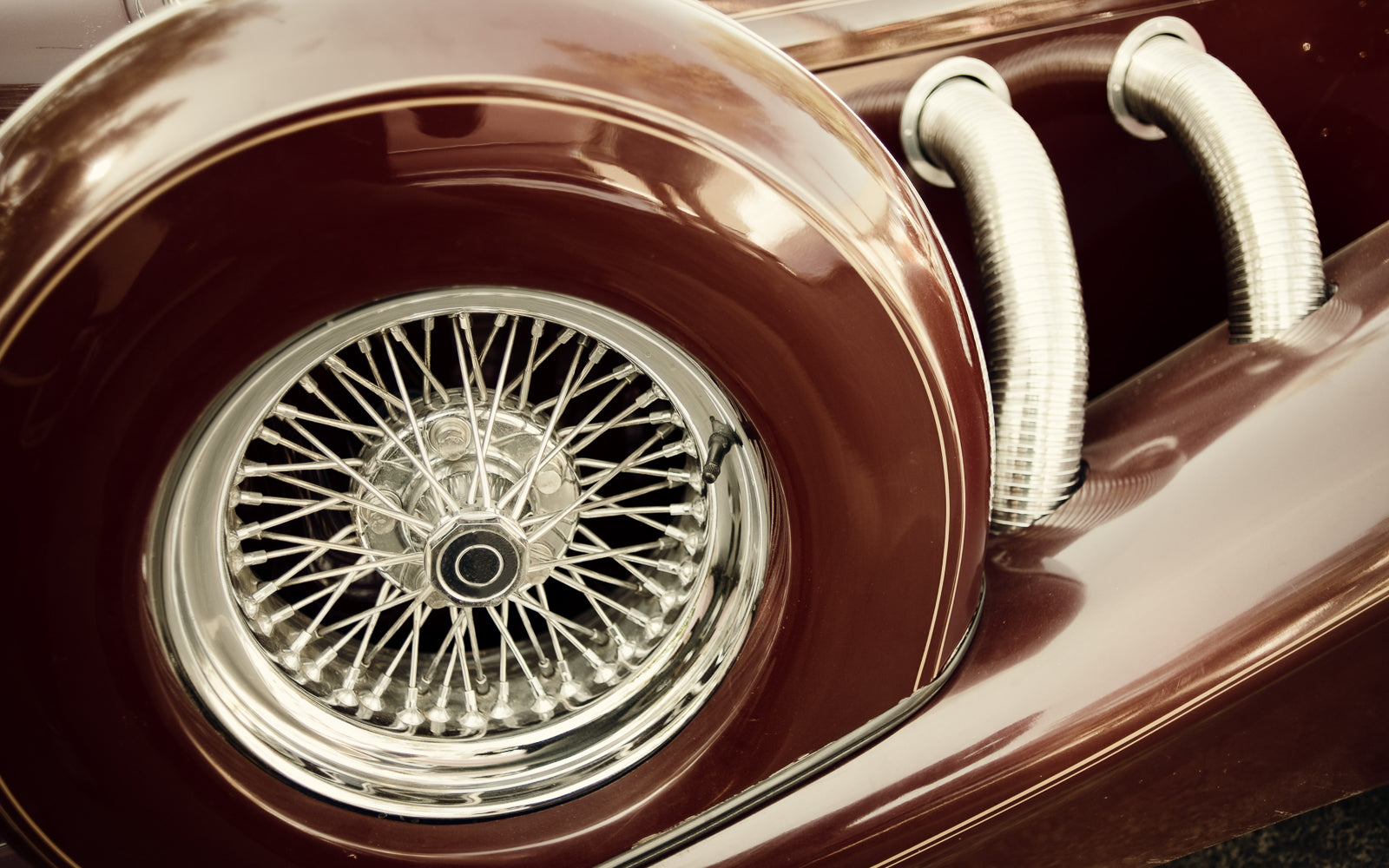
The Vintage Sports Car and the Single Cask: Two Objects That Reward the Same Obsession
There is a particular quality of attention that serious collecting requires.
Not enthusiasm, enthusiasm is common and inexpensive. Something more disciplined than that. A willingness to study what others skim over. An instinct for the difference between an object whose value derives from its story and one whose value derives from its substance. The collector who understands this distinction collects differently. They acquire with more patience, hold with more conviction, and very rarely confuse what something costs with what it is worth.
This quality of attention is as visible in a well-assembled collection of vintage sports cars as it is in a private whisky cellar of genuine depth. The two pursuits are separated by obvious differences of scale and form. But at the level of philosophy, they share a structural logic that becomes apparent the moment you examine how the best collectors in each discipline actually think.
Provenance governs both
Provenance governs both. A 1963 Ferrari 250 GTO is not simply a car of exceptional engineering, it is a documented object with a continuous history of ownership, competition record, restoration decisions, and custody. Every intervention leaves a trace. A matching-numbers car with unbroken history occupies a fundamentally different category from an identical-appearing car whose documentation is incomplete, however well it drives. The collector who understands this pays for the history as much as the object. Single cask Australian whisky operates on precisely the same logic. The cask's origin, the wine or spirit it previously held, the cooperage, the oak species and the seasoning duration constitute a provenance that shapes everything that follows. A first-fill ex-Pedro Ximénez hogshead of known origin from a reputable cooperage, the kind behind the Single Ex-Pedro Ximénez Spanish Oak Cask, is not interchangeable with a cask of uncertain history however similar their spirit output may appear. What came before determines what the maturation will become, a principle examined in full in The Provenance Question.
Scarcity is incurred, not positioned
Scarcity in both cases is a consequence of quality rather than a manufacturing decision. The reason a pre-war Alfa Romeo 8C exists in only a handful of original examples is not that Alfa chose to limit production. It is that making them correctly at the standards of the time was slow, expensive, and demanded craft that could not be scaled. Australian Single Malt whisky produced at the standard worthy of serious collection faces analogous constraints. Australian climate drives evaporation rates that reduce barrel volume substantially across maturation. A cask that enters the warehouse with hundreds of litres may yield fewer than sixty numbered bottles after years of concentration. That loss is not recoverable. It is simply what it costs to allow the spirit and oak the time and conditions required to reach structural equilibrium. The rarity is not positioned. It is incurred. The ultra-premium Exceptional Cask Collection exists precisely at that point of incurred rarity.
Both reward knowledge
Both reward the investment of knowledge over time. A collector who understands the difference between Colombo and Lampredi engines, who can read a set of competition records and understand what a particular chassis experienced, who knows which restoration workshops are trusted and which are not, that collector is equipped to make decisions a casual buyer cannot. The same is true of whisky. The collector who understands the aromatic contribution of European versus American oak, who can distinguish first-fill from refill influence in the glass, who recognises how Australian climate accelerates extraction and concentrates flavour, that person holds their collection with a different quality of understanding. A grounding in the five cask types every serious collector should know is where that fluency begins. Knowledge acquired over time transforms acquisition from purchasing into connoisseurship. In both pursuits this distinction becomes visible in the collection itself.
A shared relationship with time
There is also a shared relationship with time that distinguishes serious collecting from adjacent consumer behaviour. A vintage sports car stored correctly for twenty years is not the same object it was when acquired. Patina develops. History accumulates. The market's understanding of a particular model or period matures alongside the collector's own. A whisky cellar assembled with care across a decade carries a different weight than one assembled in a single year. The older acquisitions have context; they were purchased at a particular moment in Australian whisky's development, from producers operating at a particular scale, under conditions that no longer precisely exist. That context is inseparable from the bottles, and it is the reason for thinking carefully about building a private whisky cellar from the outset.
The parallel is not aesthetic. It is structural. Both pursuits demand patience, provenance literacy, access to the right allocations, and the discipline to hold when the temptation is to consume or liquidate. Both reward the collector who enters with serious intentions and remains serious across years.
At Baroque Whisky, every release is conceived for collectors who already understand this. The documentation, the numbered bottles, and the cask provenance disclosures are not marketing material. They are the record that makes a collection coherent and its individual pieces meaningful long after the bottles are acquired.
Continue exploring
- The Exceptional Cask Collection, numbered ultra-premium single casks
- Building a Private Whisky Cellar
- The Provenance Question
Leave a comment
This site is protected by hCaptcha and the hCaptcha Privacy Policy and Terms of Service apply.