
The Art of the Cigar Pairing: How to Match Smoke to Single Malt
There are few pleasures in the collector's repertoire as considered as the combination of a well-chosen cigar and a glass of genuinely exceptional Single Malt whisky.
Both objects demand time. A fine cigar requires an hour or more of attentive engagement; it cannot be rushed without destroying the smoke. Single malt of genuine quality rewards similar patience. The development of aroma in the glass, the shift of flavour between the first and second taste, the way the finish evolves across minutes rather than seconds. The pairing is therefore not merely a matter of flavour matching, but of tempo. Two slow pleasures held in parallel, each shaping the perception of the other.
The underlying principle of pairing is contrast and complement operating simultaneously. Flavour elements from the cigar influence how the palate perceives the whisky, and the reverse holds too. When the pairing works, neither object dominates; instead, each reveals dimensions that would be less apparent consumed alone.
Match weight to weight
Strength is the first axis of compatibility. A full-bodied, high-ligero cigar that is dense, slow-burning, and delivering substantial nicotine and a heavy flavour profile of earth, dark leather, espresso, and roasted nut, will overpower a delicate Single Malt matured in light oak. The whisky disappears beneath the smoke. Conversely, a light Connecticut-wrapped cigar whose character is subtle, creamy, and restrained will be obscured by a cask-strength ex-Pedro Ximénez release of dense texture and concentrated dark fruit. The principle is matching weight: the intensity of the cigar and the intensity of the whisky should occupy similar registers so that neither silences the other.
Pairing by cask character
Cask character creates the most productive pairings when matched against complementary wrapper and filler profiles. An ex-Bourbon American oak Single Malt delivering vanilla, caramel, toasted grain, and a clean sweetness, such as the Single Ex-Bourbon American Oak Cask, pairs naturally with a medium-bodied cigar of natural or Colorado wrapper whose earth and cedar notes provide contrast against the whisky's sweetness without overwhelming it. The cigar's spice cuts through the vanilla register; the whisky's sweetness softens the tobacco's dryness. This is classic contrast and complement at work.
Ex-Pedro Ximénez and ex-Tawny cask whiskies, with their dried fruit, walnut, and dark chocolate registers, support heavier pairings. The Single Ex-Pedro Ximénez Spanish Oak Cask and the Exceptional Cask Collection's MMXXV Edition II, Antique Tawny Cask sit squarely in this territory. A well-made Maduro wrapper, whose leaves have been fermented under heat to transform chlorophyll into dark, sweet, earthy compounds, shares tonal similarities with these whiskies: both occupy a register of concentrated sweetness, roasted depth, and textural richness. The pairing amplifies rather than contrasts, which can be extraordinary when the quality of both objects justifies it. The risk is excess; if either the cigar or the whisky is of insufficient quality to carry that combined intensity, the pairing becomes overwhelming rather than complex.
The vanilla-and-char architecture of a Tennessee Whiskey cask sits between these poles. The MMXXV Edition I, Tennessee Whiskey Cask, with its toasted oak, caramel and warm spice, is a natural companion to a medium to full cigar whose char echoes the whisky's own.
French oak and dessert wine cask whiskies, whose character tends toward aromatic elegance rather than structural density, are among the more challenging to pair precisely because their finest qualities of lifted honeyed fruit, delicate spice, and graceful texture are easily masked. A lighter, shorter cigar of exceptional construction, perhaps a petit robusto or a corona from a manufacturer who prioritises integration over strength, provides a complementary frame without dominating. The objective is to preserve the whisky's aromatic subtlety while the cigar contributes warmth and earth as a background rather than a centrepiece.
Temperature and humidity
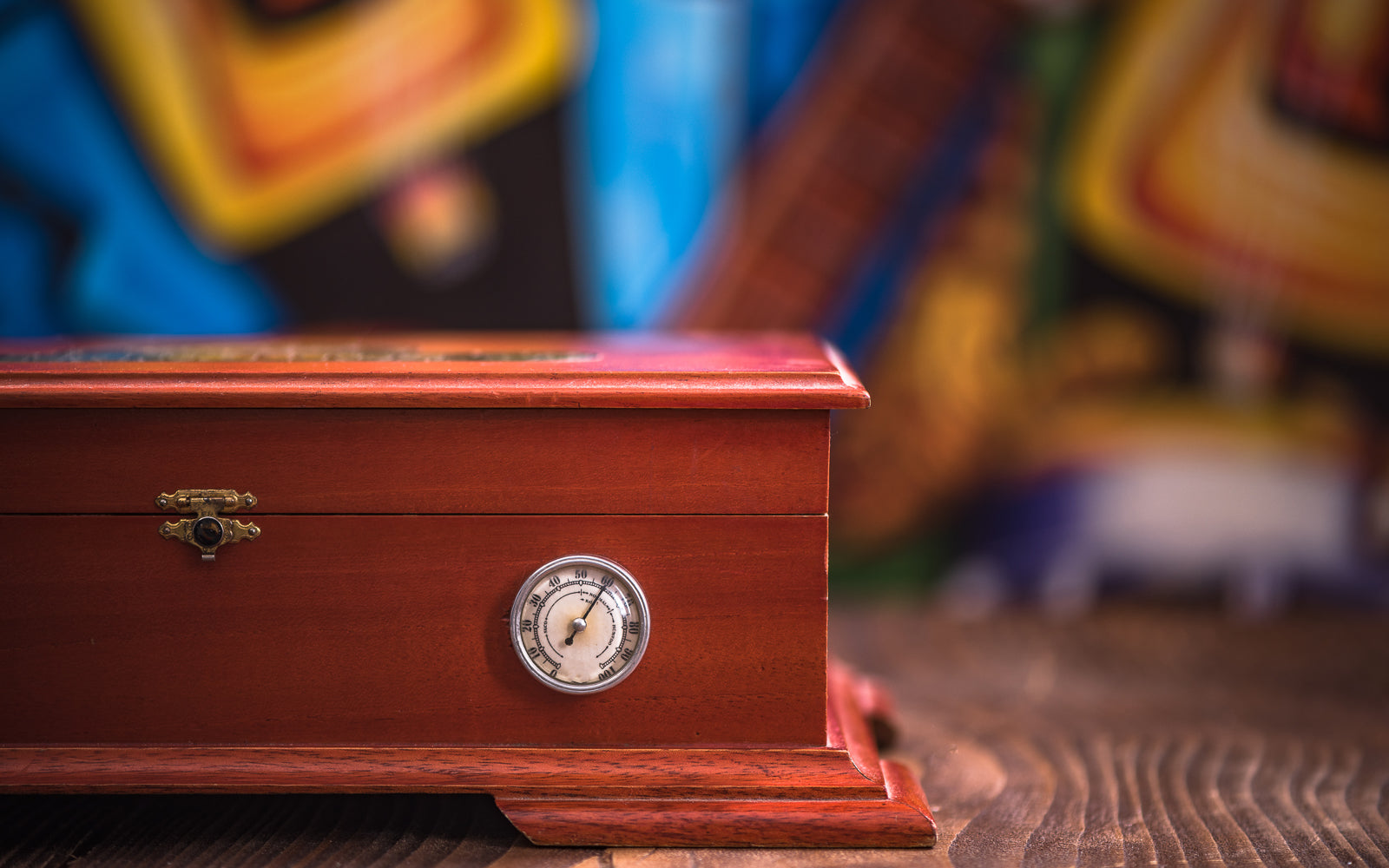
Temperature is a variable that collectors occasionally overlook. A whisky that has been chilled will contract its aromatics and slow the development of the very nuances that make pairing rewarding. Single malt intended for cigar pairing is best served at cellar temperature, broadly between sixteen and eighteen degrees celsius, allowing full aromatic expression. The cigar equally benefits from having been stored at appropriate humidity: a properly humidified cigar burns evenly, draws cleanly, and delivers consistent flavour from first third to final third. A dry cigar burns hot and delivers a harshness that will clash against any whisky regardless of how well matched the flavour profiles might otherwise be.
The setting
The physical environment shapes perception more than is sometimes acknowledged. The pairing is best experienced without competing aromas such as heavy food, strong coffee or perfume, as they interfere with the palate's ability to read either object accurately. Outdoors or in a well-ventilated space is preferable to a closed room that accumulates smoke and begins to flatten olfactory sensitivity. For more on reading those aromatics, see how to train your palate for Single Malt whisky.
At Baroque Whisky, the Tasmanian black sassafras cigar tray was designed specifically for this ritual: a single object that holds both the glass and the cigar in a frame worthy of the experience. The materials chosen, dense dark-grained Tasmanian sassafras, brass fittings and engraved Glencairn crystal, reflect the same philosophy that governs every Baroque release, that the objects surrounding exceptional whisky should meet it at its own level. Further pairing notes are gathered on the Baroque cigar pairings page.
The pairing, done well, is one of the most refined expressions of collector sensibility. It requires knowledge, patience, quality materials, and genuine attention. All the things that distinguish a collector from a consumer.
Continue exploring
- The Tasmanian Black Sassafras Cigar Tray
- The Exceptional Cask Collection, for the fullest cigar-companion whiskies
- Baroque Cigar Pairings
Leave a comment
This site is protected by hCaptcha and the hCaptcha Privacy Policy and Terms of Service apply.